

In a world where waiting for your phone to charge feels like watching paint dry, innovative charging technologies are here to save the day. Imagine a future where your devices power up faster than you can say “low battery.” With advancements that promise to zap your gadgets back to life in mere minutes, the days of frantic searches for an outlet are becoming a thing of the past.
Overview of Innovative Charging Technologies
Innovative charging technologies are revolutionizing how devices receive power. With rapid advancements, the capability to charge gadgets within minutes is becoming a reality.
Definition and Importance
Innovative charging technologies encompass various methods that enhance power delivery to devices. These methods include wireless charging, fast charging, and solar charging solutions. Importance lies in their ability to minimize downtime for users. Batteries that recharge quickly boost productivity and convenience, especially in today’s fast-paced world. Enabling devices to have extended battery life is crucial for maintaining functionality without frequent interruptions.
Key Trends in the Industry
Several key trends shape the landscape of charging technologies. Wireless charging has gained traction, allowing users to charge without cables. Fast-charging solutions, such as USB Power Delivery and Qualcomm Quick Charge, enable significant power boosts in minimal time. Eco-friendly solar charging systems are also emerging, appealing to sustainability-conscious consumers. Alongside these, the integration of charging technologies with IoT devices showcases a shift towards smarter energy use. Competitive development in the industry drives innovation, resulting in more options for consumers.
Types of Innovative Charging Technologies
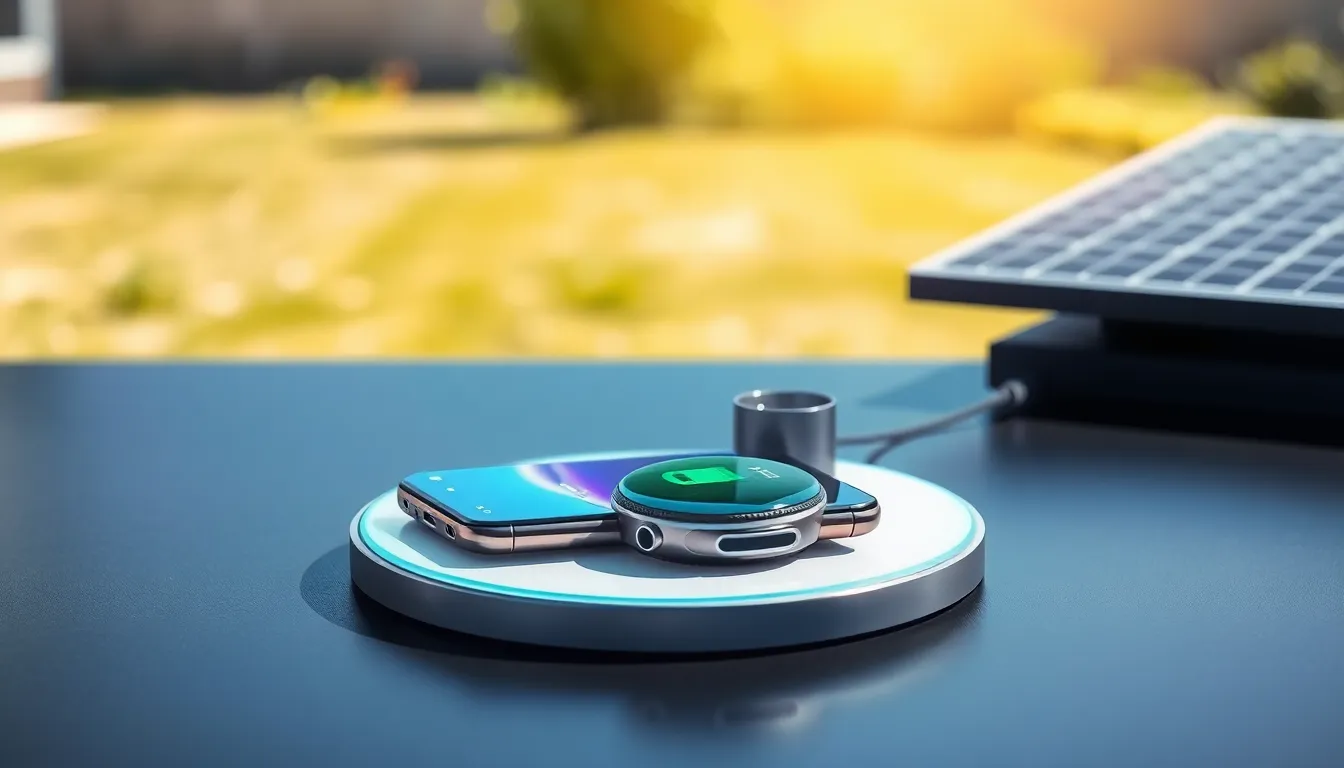
Innovative charging technologies encompass a variety of methods supporting efficient and rapid device charging.
Wireless Charging
Wireless charging eliminates the need for physical connectors by using electromagnetic fields. This method simplifies the charging process with charging pads and stands, allowing devices to charge just by placing them on a surface. The convenience extends to various devices, including smartphones and smartwatches. Current standards like Qi have gained widespread adoption, making wireless charging more accessible in public spaces. As technology advances, improvements in energy transfer efficiency and compatibility with multiple devices continue to emerge.
Fast Charging Solutions
Fast charging solutions have revolutionized how devices gain power quickly. Techniques such as USB Power Delivery and Qualcomm Quick Charge enable high wattage delivery, significantly reducing charging time. Charging speeds can exceed 100 watts, allowing devices to go from 0 to 100% in under an hour. Various manufacturers adopt fast charging methods, making them standard across devices like smartphones and laptops. The growing emphasis on user experience drives the development of these solutions, ensuring that convenience and speed remain top priorities.
Solar-Powered Charging
Solar-powered charging harnesses renewable energy, making it an eco-friendly option. This technology uses photovoltaic cells to convert sunlight into electricity, allowing devices to charge even while outdoors. Devices can include solar chargers for smartphones and portable power stations for larger electronics. Adoption of solar charging systems reflects a shift towards sustainability, appealing to environmentally conscious consumers. With advancements in efficiency and portability, solar-powered solutions offer a practical alternative to traditional charging methods.
Benefits of Innovative Charging Technologies
Innovative charging technologies offer significant advantages, enhancing user experience and promoting sustainable practices. These advancements support a more efficient and practical way of powering devices.
Convenience and Accessibility
Accessibility increases with innovative charging technologies as users can charge devices without physical connectors. Wireless charging enables users to simply place their devices on compatible surfaces, eliminating the hassle of tangled cords. Fast charging solutions minimize downtime; many devices now recharge in under an hour. Users often find themselves able to power up quickly while multi-tasking or on the go. The rise of these technologies also aligns with growing adoption of IoT devices, making charging seamless across various gadgets. Convenience drives consumer preference toward systems that integrate effortlessly into their lifestyles.
Environmental Impact
Innovative charging technologies positively influence the environment. Solar charging solutions harness renewable energy, reducing reliance on fossil fuels. Users benefit from these eco-friendly alternatives by lessening their carbon footprint. Furthermore, many fast charging solutions are designed for energy efficiency, optimizing power delivery to minimize waste during usage. As electric vehicle adoption rises, charging infrastructure expands, promoting sustainable transportation. Innovations in energy storage also contribute to renewable practices, creating a more balanced approach to energy consumption in daily life.
Cost Efficiency
Cost efficiency plays a vital role in the benefits of innovative charging technologies. Fast charging reduces time spent connected to power sources, enhancing device longevity and reducing wear on batteries. Wireless charging stations, while initially an investment, eliminate the need for multiple chargers and cords, saving money in the long run. Users who adopt solar charging systems often see a decrease in electricity bills, adding up over time as they rely less on grid power. The integration of these technologies encourages smarter energy practices, leading to potential savings for consumers in various contexts.
Challenges and Limitations
Innovative charging technologies face several challenges that can impact their widespread adoption and effectiveness. These limitations must be addressed to fully realize the benefits of advanced charging methods.
Compatibility Issues
Different charging standards create compatibility challenges. Many devices require specific protocols, making it difficult to ensure universal usage. Older devices may not support newer technologies like wireless or fast charging, causing frustration for consumers. User experience diminishes when a cable or adapter is unavailable. Compatibility inconsistencies hinder seamless transitions for users between various devices. Manufacturers, therefore, must prioritize interoperable solutions to enhance user convenience.
Infrastructure Development
Infrastructure plays a vital role in supporting innovative charging methods. Lack of widespread availability of charging stations limits convenience, particularly for electric vehicles. Urban areas may showcase better infrastructure than rural regions, creating a disparity. Investment in upgrade projects is necessary to promote broader accessibility and improve user experience. Furthermore, outdated electrical systems can impede the adoption of high wattage delivery methods. Emphasizing infrastructure development ensures that consumers can fully benefit from innovative charging technologies.
Future of Innovative Charging Technologies
Innovative charging technologies continue to evolve rapidly, with significant advancements expected in the coming years. These developments promise to transform the way devices are charged, enhancing user convenience and sustainability.
Emerging Research and Development
Emerging research focuses on developing ultra-fast charging solutions that could charge devices fully in mere minutes. Advances in battery technology, such as solid-state batteries, aim to increase energy density and improve safety. Ongoing projects explore wireless power transfer over greater distances, potentially allowing devices to charge while in use. Researchers also investigate eco-friendly materials that enhance the efficiency of solar charging systems, contributing to a reduction in the carbon footprint. Collaboration between tech companies and academic institutions accelerates these innovations, fostering a competitive environment that drives progress.
Predictions for Market Growth
Predictions indicate substantial market growth for innovative charging technologies in the next five years. Analysts project that the global wireless charging market could reach $21 billion by 2026, reflecting a compound annual growth rate of over 25%. Fast charging solutions are also expected to see heightened demand, driven by consumer preferences for quicker power-ups. As electric vehicle adoption rises, investments in charging infrastructure will likely increase, supporting a more robust market. The integration of IoT devices will further accelerate growth, as smart homes and connected technologies embrace these advancements for seamless energy management.
The landscape of charging technologies is evolving rapidly and offers exciting possibilities for consumers. With innovations like wireless charging and ultra-fast charging solutions on the horizon, the days of long wait times for device power-ups are numbered.
These advancements not only enhance user convenience but also promote sustainable practices through eco-friendly options like solar charging.
As the industry navigates challenges such as compatibility and infrastructure development, the future looks bright for smarter energy management.
Investing in these technologies will lead to a more efficient and practical way to keep devices powered, ultimately transforming how users interact with their gadgets.


