

In today’s tech-savvy world, staying connected is as essential as breathing. Enter the unsung hero of your digital life: the network adapter. This little device might not wear a cape, but it sure knows how to save the day by transforming your computer into a connectivity powerhouse. Whether you’re streaming the latest cat videos or engaging in an epic online battle, a reliable network adapter can make all the difference.
Imagine trying to navigate the internet with a rusty old bicycle instead of a sleek sports car. That’s what using a subpar network adapter feels like. From wired to wireless options, these gadgets come in all shapes and sizes, ensuring that your connection is faster than your neighbor’s Wi-Fi password guesswork. So buckle up as we dive into the fascinating world of network adapters and discover how they can elevate your online experience to new heights.
Overview Of Network Adapters
Network adapters serve as crucial components for establishing connections between devices and networks. These devices translate data from a computer into a format suitable for transmission. Both wired and wireless adapters perform this essential function, each suited for different needs.
Wired network adapters connect through Ethernet cables, providing stable and fast connections suitable for tasks requiring high bandwidth. Wireless network adapters enable devices to connect without cables, utilizing radio signals. They offer flexibility and mobility, allowing users to access networks from various locations.
Performance varies among different types of network adapters. Ethernet adapters typically deliver lower latency and higher speeds, making them ideal for gaming and streaming activities. In contrast, wireless adapters may experience interference, affecting connection speeds under certain conditions.
Compatibility plays a significant role when selecting a network adapter. It is crucial to choose an adapter that aligns with the device’s operating system and network requirements. Current standards like IEEE 802.11ac and 802.11ax exist for wireless connections, while various Ethernet port types are available, such as Fast Ethernet and Gigabit Ethernet.
Additionally, considering future needs is vital. Emerging technologies, including 5G and Wi-Fi 6, promise to enhance network performance. Hence, investing in a high-quality network adapter can yield long-term benefits, paving the way for improved connectivity and a better online experience.
Many manufacturers offer network adapters with additional features, such as built-in security and enhanced range. High-quality adapters often ensure reliable connections, minimizing downtime. Hence, understanding the unique aspects of each type supports informed decisions when enhancing network capabilities.
Types Of Network Adapters
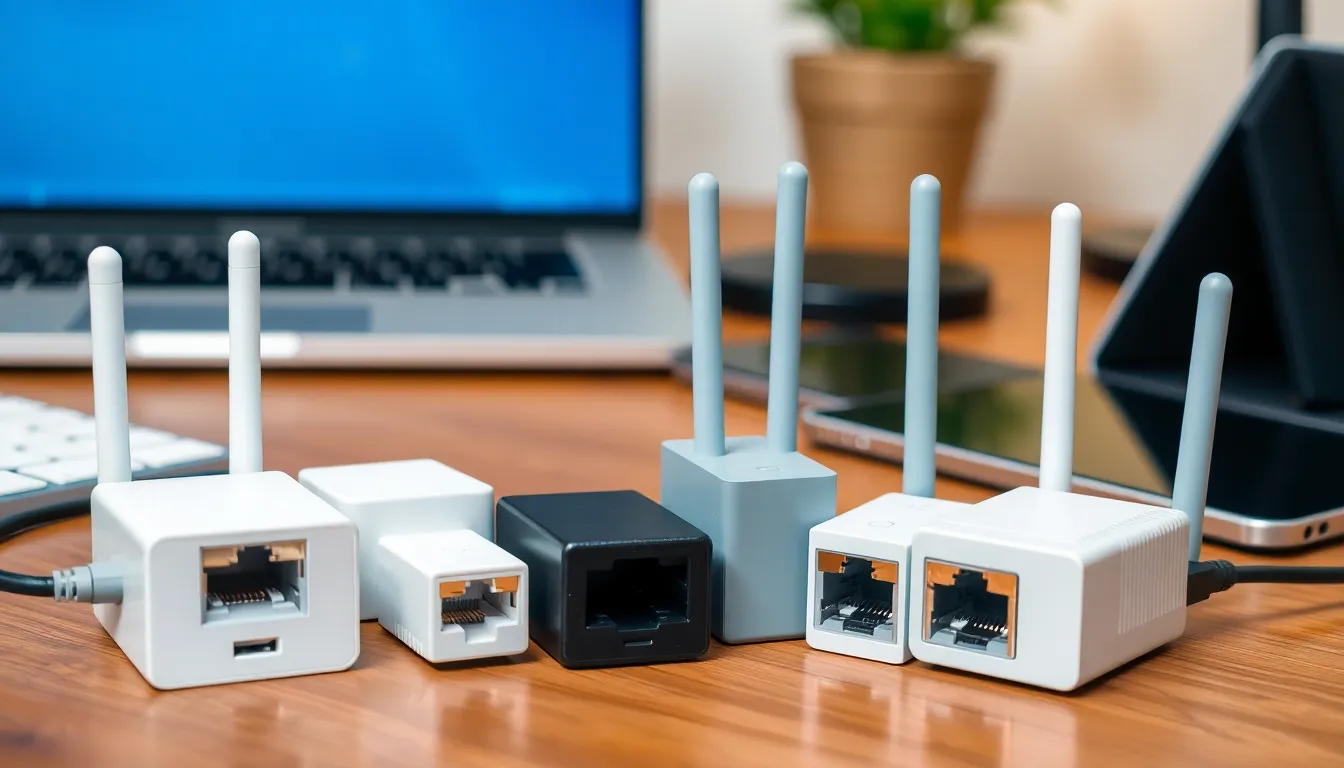
Network adapters come in various forms, each designed to cater to specific connectivity needs. Understanding their differences aids users in selecting the right option.
Wired Network Adapters
Wired network adapters connect directly to devices via Ethernet cables. These adapters provide stable connections ideal for tasks that require consistent and high bandwidth. Speed and low latency are significant advantages, making them suitable for gaming, video streaming, and large file transfers. Different types include Fast Ethernet, which supports speeds of 100 Mbps, and Gigabit Ethernet, which can handle up to 1 Gbps. Ethernet adapters tend to outperform wireless solutions in speed and reliability, ensuring a seamless online experience. Their plug-and-play functionality makes installation straightforward.
Wireless Network Adapters
Wireless network adapters utilize radio signals to connect devices to networks. These adapters offer flexibility and convenience, especially for mobile devices and laptops. Current standards, such as IEEE 802.11ac and 802.11ax, ensure compatibility with modern Wi-Fi networks, promoting higher speeds and greater range. Interference from physical obstructions can affect performance, necessitating optimal placement for improved connectivity. Many manufacturers include features like dual-band support, which enhances performance by reducing congestion. Wireless adapters enable users to maintain high connectivity while moving around their space.
Key Features To Consider
Understanding key features helps in selecting the most suitable network adapter. Prioritizing specific attributes enhances connectivity and overall performance.
Speed and Performance
Speed and performance represent vital considerations when choosing network adapters. Wired adapters like Gigabit Ethernet consistently deliver higher speeds and lower latency, making them optimal for activities demanding high bandwidth. Wireless options, such as those adhering to IEEE 802.11ac, offer decent speed but may face interruptions. Users engaging in tasks like online gaming or 4K streaming benefit significantly from stable connections. Consider connection type and speed ratings to ensure the selected adapter meets personal needs.
Compatibility
Compatibility remains crucial in the adapter selection process. Network adapters must work seamlessly with the device’s operating system and existing infrastructure. For instance, adapters compatible with Windows or macOS offer versatile use cases. In addition, ensuring backward compatibility with older protocols guarantees greater connectivity options. Examining supported frequencies and standards helps users choose an adapter that integrates smoothly with their home or workplace network setup.
Security Features
Security features play a significant role when selecting network adapters. Built-in encryption protocols, such as WPA3, enhance data protection during transmission. Furthermore, adapters incorporating features like firewall support and VPN compatibility offer added layers of security against cyber threats. Prioritizing these aspects decreases vulnerability and protects sensitive information from unauthorized access. Choosing adapters with robust security features fosters a secure browsing experience while maintaining reliable connectivity.
Top Network Adapter Brands
Several brands lead the network adapter market, offering reliable options for various user needs. These brands consistently innovate, ensuring users find the right fit for optimal performance.
Brand A
TP-Link stands out for its extensive range of highly rated network adapters. Known for affordability and performance, TP-Link’s devices suit casual users and professionals. Their Archer series features both wired and wireless options, catering to different connectivity needs. Advanced security features, such as WPA3, enhance user protection. Ensuring compatibility with current standards like Wi-Fi 6, these adapters support future networking demands. Perfect for streaming and gaming, TP-Link network adapters provide dependable connectivity that users appreciate.
Brand B
Netgear has a reputation for high-performance network adapters, particularly among gamers. Offering products like the Nighthawk series, they focus on delivering ultra-fast speeds and low latency. Users benefit from features like dual-band technology and advanced QoS settings, which prioritize gaming traffic. Netgear also emphasizes easy setup with user-friendly apps, making it accessible for everyone. Their commitment to innovation ensures that the adapters remain competitive and aligned with emerging technologies. Gamers trust Netgear for a seamless online experience without interruptions.
Brand C
ASUS is known for its premium quality network adapters, especially in the gaming community. Their ROG series is designed for high-performance situations, providing exceptional speeds and stability. With features that include adaptive QoS and advanced cooling solutions, ASUS delivers an unparalleled experience. Users can easily manage network settings through intuitive software, enhancing usability. Compatibility with the latest Wi-Fi standards further ensures maximum efficiency. ASUS network adapters cater to serious users who require top-notch performance and reliability.
Network adapters play a vital role in enhancing connectivity and overall online experiences. Choosing the right adapter can make a significant difference in performance whether it’s for gaming streaming or general browsing. With options ranging from wired to wireless adapters users can find solutions tailored to their specific needs.
Brands like TP-Link Netgear and ASUS offer a variety of high-quality adapters that cater to different preferences and requirements. By considering key factors such as speed compatibility and security users can ensure they invest in an adapter that not only meets current demands but also prepares them for future advancements in technology. Ultimately a reliable network adapter is essential for anyone looking to optimize their internet experience.