
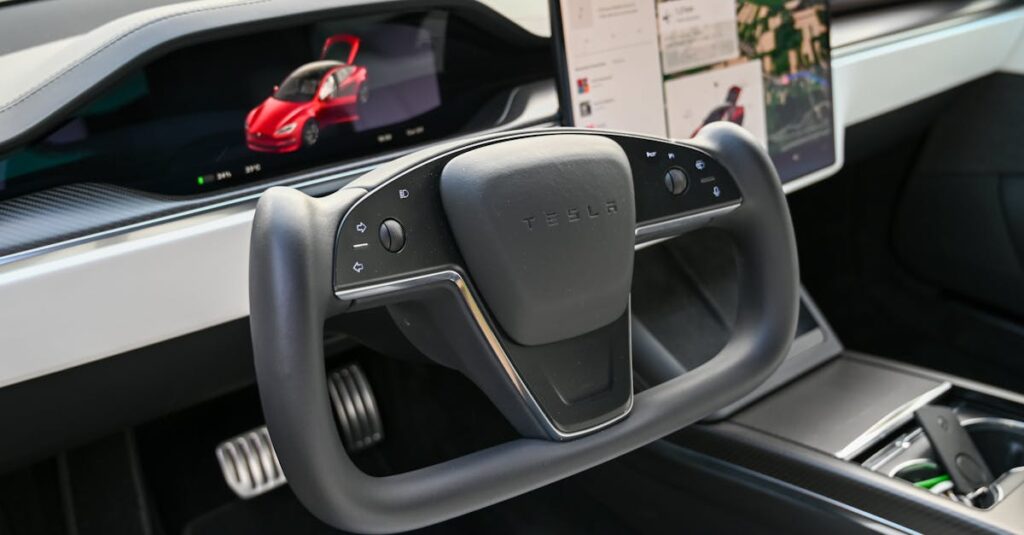
Imagine a world where your car drives you to work while you sip coffee and catch up on your favorite show. Sounds like a dream, right? Enter autonomous electric vehicles (EVs), the futuristic rides that are not just about saving the planet but also about reclaiming your precious time. These high-tech marvels promise to turn your daily commute into a relaxing experience—no more road rage or fumbling with GPS.
Table of Contents
ToggleOverview of Autonomous EVs
Autonomous electric vehicles (EVs) utilize advanced technologies for navigation and operation. These vehicles navigate using sensors, cameras, and artificial intelligence, enabling them to detect obstacles and make real-time decisions. The integration of electric powertrains contributes to reduced emissions and improved energy efficiency in transportation.
Safety remains a critical focus area for autonomous EVs. They are designed to minimize accidents by constantly monitoring surroundings. Studies indicate that autonomous driving technology can reduce traffic collisions by up to 90%. This statistic highlights the potential safety benefits that these vehicles offer.
Transportation efficiency improves with autonomous EVs. By optimizing routes and decreasing traffic congestion, they enhance travel times. Research indicates that these vehicles can analyze traffic patterns to adjust their driving behavior, resulting in smoother traffic flow.
User convenience is another key advantage. Passengers can engage in various activities while commuting, such as working or relaxing. Surveys show that many individuals prefer the idea of autonomous commuting for its potential to reduce stress and increase productivity.
Market adoption of autonomous EVs continues to grow. Industry experts predict that the global autonomous vehicle market will reach approximately $556 billion by 2026. This growth reflects increasing investment in EV technology and infrastructure.
Regulatory frameworks are evolving alongside technological advancements. Governments are developing guidelines to ensure safe deployment and operation of autonomous vehicles. Collaboration between manufacturers, lawmakers, and safety organizations plays a huge role in shaping policies.
Overall, autonomous EVs represent a significant advancement in the transportation sector. They combine sustainability, efficiency, and safety, paving the way for a transformative future in mobility.
Key Technologies Behind Autonomous EVs
Autonomous EVs rely on a combination of sophisticated technologies to operate safely and effectively on roads. These innovations enhance vehicle performance, ensuring a seamless driving experience.
Sensors and Perception
Sensors play a pivotal role in enabling autonomous EVs to navigate their environment. Lidar units, cameras, and radar systems work together to provide a comprehensive view of the surroundings. Data from these sensors allows vehicles to detect obstacles, pedestrians, and other vehicles in real-time. Accurate perception is critical for making informed driving decisions, such as when to stop or change lanes. Together, these technologies contribute to improved safety, with studies suggesting they can help reduce traffic accidents by up to 90%.
Artificial Intelligence and Machine Learning
Artificial intelligence and machine learning empower autonomous EVs to analyze vast amounts of data quickly. Algorithms process input from sensors to predict the behavior of surrounding objects. Through continuous learning, these systems adapt and enhance their performance over time. AI enables effective decision-making under various driving conditions, including weather variability and complex traffic patterns. As a result, autonomous EVs improve transportation efficiency, ensuring smoother and more reliable travel experiences for passengers.
Benefits of Autonomous EVs
Autonomous electric vehicles (EVs) offer numerous advantages that contribute to enhanced safety, environmental sustainability, and user convenience.
Safety Improvements
Safety improvements stand out as a primary benefit. Studies show autonomous driving technology can reduce traffic collisions by up to 90%. These vehicles utilize advanced sensors and AI, allowing them to detect obstacles effectively. Enhanced awareness of surroundings leads to fewer accidents, making roads safer for everyone. Continuous monitoring of vehicle performance and surroundings further contributes to safer commuting experiences. Moreover, autonomous EVs can make split-second decisions, minimizing risks that human drivers might overlook.
Environmental Impact
Environmental impact plays a crucial role in the appeal of autonomous EVs. Their electric powertrains significantly reduce greenhouse gas emissions compared to traditional vehicles. By optimizing routes, these vehicles decrease energy consumption and promote efficient travel. Studies suggest that widespread adoption of autonomous EVs could substantially lower urban pollution levels. As cities embrace cleaner transportation, air quality will improve, benefitting public health. Ultimately, the fusion of autonomous technology and electric power offers a sustainable approach to future mobility.
Challenges and Concerns
Several challenges and concerns accompany the deployment of autonomous electric vehicles (EVs), impacting their integration into society.
Regulatory Hurdles
Regulations currently lag behind technological advancements, creating obstacles for autonomous EVs. Authorities must develop comprehensive laws addressing safety standards, liability, and insurance frameworks. Collaboration among manufacturers, lawmakers, and safety organizations remains crucial for creating effective regulations. Some regions lack clear guidelines, which may delay the growth of the autonomous EV market. Inconsistent regulations across jurisdictions can confuse consumers and manufacturers alike. The complexity of establishing uniform standards presents additional challenges for widespread adoption. Navigating these regulatory hurdles requires significant time and resources.
Ethical Considerations
Ethical dilemmas arise in the programming of autonomous EVs, particularly concerning decision-making in critical situations. Developers often face moral questions regarding prioritization when accidents are unavoidable. Potential scenarios, such as choosing between the safety of passengers and pedestrians, complicate programming choices. Different cultural values influence public perceptions of these ethical decisions. Additionally, transparency in decision-making processes fosters trust among users. The lack of a universally accepted ethical framework presents ongoing challenges in the industry. Addressing these concerns is essential for gaining public acceptance and trust in autonomous EV technology.
The Future of Autonomous EVs
Innovations in autonomous electric vehicles promise to reshape the transportation landscape over the next decade. Growth in this market is noteworthy, with estimations suggesting it may reach approximately $556 billion by 2026. Market expansion stems from heightened investments in technology as well as infrastructure.
Integration of advanced sensors, artificial intelligence, and machine learning enhance vehicle capabilities. Sensors such as Lidar and cameras provide a comprehensive awareness of surroundings, allowing for seamless navigation. Continuous monitoring of vehicle performance dramatically increases safety, leading to reduced accident rates.
Regulatory frameworks evolve to support the deployment of autonomous EVs. Collaboration among stakeholders, including manufacturers and lawmakers, remains essential to establish robust safety standards. Standardized regulations across different jurisdictions will ease public concerns and streamline adoption.
Emerging challenges also accompany the advancement of autonomous EV technology. Regulatory hurdles may impede rapid progress, with existing laws struggling to keep pace with innovations. Inconsistent rules can create confusion, especially for consumers and manufacturers.
Ethical considerations add to the complexity of integration. Developers face moral dilemmas when determining responses in unavoidable accident scenarios, influenced by diverse cultural perspectives. A universally accepted ethical framework remains elusive, complicating public acceptance.
Addressing safety, regulatory, and ethical challenges is crucial for successful integration into society. Continued advancements in technology will enhance user experience, providing increased safety and convenience. Autonomous EVs hold the potential to significantly improve urban environments through lower emissions and reduced traffic congestion.
Autonomous EVs are set to redefine transportation as we know it. Their potential to enhance safety and reduce environmental impact makes them a vital part of future mobility solutions. With ongoing technological advancements and increasing market interest, these vehicles are likely to become more integrated into daily life.
However, the path forward isn’t without challenges. Addressing regulatory and ethical concerns will be essential for fostering public trust and ensuring a smooth transition. As the industry navigates these complexities, the promise of autonomous EVs to create safer and more sustainable urban environments remains a compelling vision for the future of transportation.