
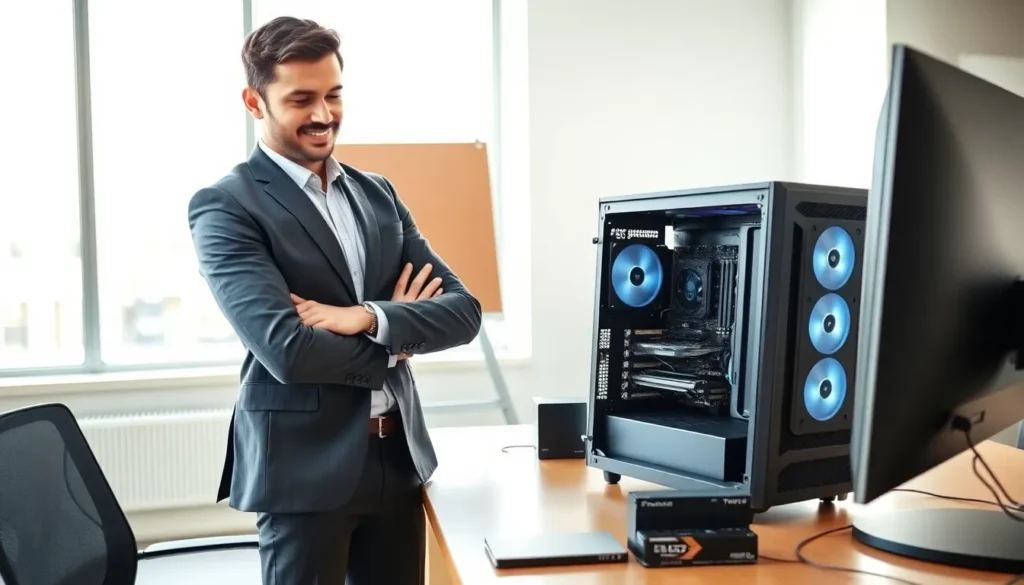
Learning how to hardware starts with understanding the physical components inside a computer. Every desktop, laptop, and server relies on hardware to function. The processor calculates data. The memory stores information temporarily. The storage drive holds files permanently. These parts work together to run software, display images, and connect to the internet.
This guide explains computer hardware in plain terms. Readers will learn what each component does, how to select the right parts, and how to keep hardware running smoothly. Whether someone plans to build a PC or simply wants to upgrade an existing machine, this information provides a solid foundation.
Table of Contents
ToggleKey Takeaways
- Understanding how to hardware begins with knowing the core components: CPU, motherboard, RAM, and storage drives.
- The CPU acts as the computer’s brain, while RAM provides temporary memory for running applications smoothly.
- Choose hardware based on your specific needs—gaming requires a powerful GPU, while content creation benefits from more RAM and fast SSDs.
- Combining an SSD for your operating system with an HDD for large files balances speed and cost-effective storage.
- Regular maintenance like dust cleaning and temperature monitoring extends hardware lifespan and prevents overheating.
- Always verify compatibility between CPU sockets, motherboard types, and RAM generations before purchasing components.
What Is Computer Hardware?
Computer hardware refers to the physical parts of a computer system. These components include anything a person can touch, the keyboard, monitor, mouse, and internal parts like the processor and memory modules.
Hardware differs from software in one key way: software consists of programs and instructions, while hardware provides the physical structure that runs those programs. A computer needs both to operate.
Internal hardware sits inside the computer case. This category includes the motherboard, central processing unit (CPU), random access memory (RAM), storage drives, and power supply unit (PSU). External hardware connects from outside the case. Monitors, keyboards, mice, and printers fall into this group.
Understanding how to hardware means knowing how these parts interact. The motherboard acts as the central hub. It connects the CPU, RAM, and storage devices. The power supply delivers electricity to each component. Graphics cards render images and video. Every piece has a specific job.
People who understand hardware can troubleshoot problems faster. They can also make smarter purchasing decisions and perform basic upgrades without professional help.
Essential Hardware Components You Need to Know
Several core components make up a functional computer. Each part handles different tasks. Learning about these parts helps users understand how to hardware effectively.
CPU and Motherboard
The CPU, or central processing unit, serves as the brain of the computer. It processes instructions from software and performs calculations. Faster CPUs handle more operations per second. Intel and AMD manufacture most consumer CPUs today.
CPU speed is measured in gigahertz (GHz). A higher number generally means faster performance. But, core count also matters. Modern CPUs contain multiple cores, allowing them to handle several tasks simultaneously. A quad-core processor can run four processes at once.
The motherboard connects all hardware components. It contains slots for the CPU, RAM, and expansion cards. It also provides ports for USB devices, audio equipment, and display cables. Choosing the right motherboard determines which other components a system can support.
Motherboards come in different sizes: ATX, Micro-ATX, and Mini-ITX. Larger boards offer more expansion slots. Smaller boards fit in compact cases. Compatibility between the motherboard and CPU is essential, Intel and AMD processors require different socket types.
Memory and Storage
RAM, or random access memory, stores data temporarily while the computer runs. Applications load into RAM for quick access. More RAM allows users to run more programs simultaneously without slowdown. Most computers today use between 8GB and 32GB of RAM.
RAM speed also affects performance. Faster RAM transfers data more quickly. DDR4 and DDR5 represent current RAM standards. DDR5 offers higher speeds but requires compatible motherboards.
Storage drives hold files permanently. Two main types exist: hard disk drives (HDDs) and solid-state drives (SSDs). HDDs use spinning magnetic disks. They cost less per gigabyte but operate more slowly. SSDs use flash memory with no moving parts. They read and write data much faster than HDDs.
Many users combine both types. They install the operating system on an SSD for fast boot times. They store large files like videos and photos on an HDD for cost-effective capacity.
How to Choose the Right Hardware for Your Needs
Selecting hardware depends on intended use. A gaming PC requires different components than an office workstation. Understanding how to hardware for specific tasks saves money and improves performance.
For basic tasks like web browsing and document editing, modest hardware works fine. An entry-level CPU, 8GB of RAM, and a 256GB SSD handle everyday use without issue. These systems cost less and consume less power.
Gaming demands more powerful hardware. Modern games require fast CPUs, dedicated graphics cards, and at least 16GB of RAM. A graphics card, or GPU, renders game visuals. NVIDIA and AMD produce the leading gaming GPUs. Higher-end cards display games at higher resolutions with smoother frame rates.
Content creators need hardware optimized for video editing, 3D rendering, or music production. These tasks benefit from CPUs with many cores, 32GB or more of RAM, and fast SSD storage. Large video files require significant storage space and quick read/write speeds.
Budget matters in every scenario. Users should prioritize components based on their main activities. A gamer might spend more on a GPU. A video editor might invest in extra RAM. Building a balanced system prevents bottlenecks where one weak component limits overall performance.
Researching compatibility before purchasing prevents costly mistakes. CPU sockets must match motherboard types. RAM generations must align with motherboard specifications. Power supplies must provide enough wattage for all components.
Basic Hardware Maintenance Tips
Proper maintenance extends hardware lifespan and prevents performance issues. Regular care keeps components running efficiently.
Dust accumulates inside computer cases over time. Dust clogs fans and blocks airflow. This causes components to overheat. Users should clean their computers every three to six months. Compressed air removes dust from fans, heatsinks, and vents. Opening the case provides access to internal components.
Monitoring temperatures helps catch problems early. Free software like HWMonitor or Core Temp displays CPU and GPU temperatures. CPUs typically run safely below 80°C under load. Consistently high temperatures indicate cooling problems.
Keeping drivers updated improves hardware performance. Manufacturers release driver updates that fix bugs and improve compatibility. GPU drivers especially benefit from regular updates. Windows Update handles some drivers automatically, but graphics card software provides the latest versions.
Physical handling matters too. Static electricity can damage sensitive components. Users should ground themselves before touching internal parts. Anti-static wrist straps provide extra protection during upgrades or repairs.
Backing up data protects against storage drive failure. All drives eventually fail. External drives or cloud storage provide secondary copies of important files. Regular backups minimize data loss when hardware problems occur.